The Photographer

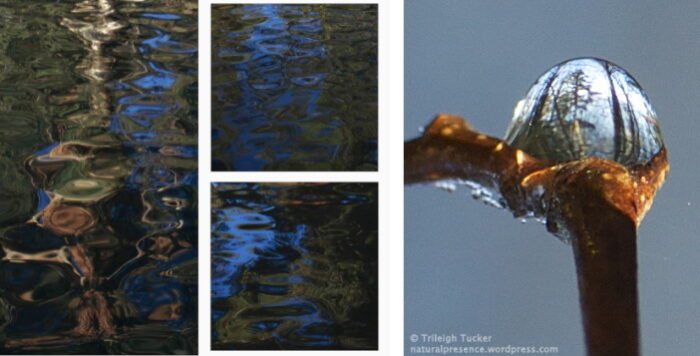
L: acoustic ecology series, by Adela C. Licona (with a quote from Joy Harjo, imagine what it would be like to dance close together – in this land of water and knowledge)
R: Forest on a Pedestal, by Trileigh Tucker

When you consider that in the last hour more pictures have been taken than in the entire first century of photography, you’ll understand the difficulty modern photographers face in reaching us.

There are, of course, picture takers, and there are photographers. There are those of us who click at things, and there are those who catch frame-fulls of beauty, hidden radiance even, and then there are those who carefully, lovingly, fill up the rectangle with much of what is unseen.

The camera is an instrument that teaches people how to see without a camera.  –Dorothea Lange
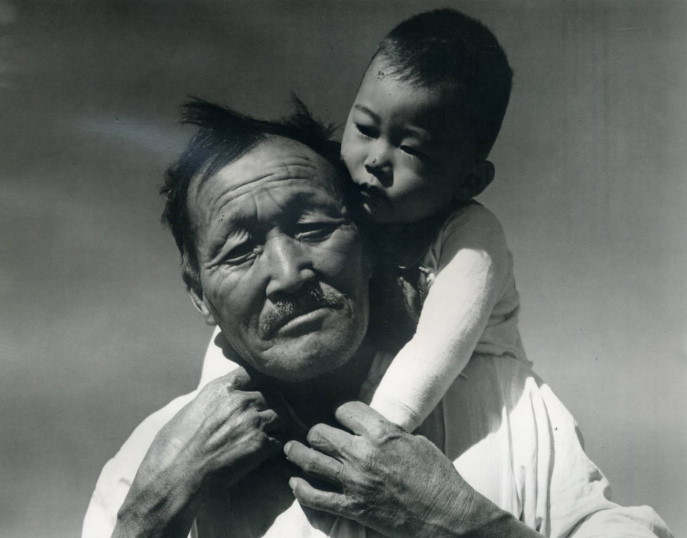
Japanese Relocation Camp, California, 1942 – Dorothea Lange


The Photographer’s Shooting Script: a sample

grieving falcon, as seen from a receding glacier
giant European windmill in love with a field of lavender
palm tress racing toward an ocean sunset
in the middle of a deciduous forest, a pagoda, with a bride
Marrakesh market with its sunrise ruptures of colour
Tokyo covered in evening ochre
attendees at a wake for the late river Thames
challenger to a Central Park doom sayer
girder on Eiffel Tower reveals rules of harmony
triptych of defiant tulips
tabloid reverting to pulp, then fir seedlings
standoff, choice of weapons, lipstick or party balloons
any scene, when shifting left, looks like Chernobyl
a degree right, and its children, skipping in a garden
cliffs weeping long after the storm has left
manifestos burning in a sink
committees coming under the influence of meaning
evidences of selflessness
an outbreak of mercy
a blessing, repeated, growing like fractals
the hidden part of the soul
a macro of the self you pray you’re becoming
a handprint, turning us ever toward our neighbours
 

Deer in the Mist

Our hearts follow fox trails of passion,
but passion is kindling, is appetite, not love.

It is no surprise that battles rage on,
surround us with their danger,
supply us their suffering,
what astonishes is the singing,
in the soulless hour,
preceding any promise of dawn,
as though Christ and the Holy Ghost
just furnished all spring’s flowers with vocal folds,
the singers, now, unstoppable.

Wisdom says fear is driven over the cliff,
drowned in the sea by love.

Says, our spirit persists, nourished by the promise
of winter’s end,
by the warm smell of deer on the cut lawn,
coming through the dark mist,
by lingering
at brunch, on a patio with a friend.

Everywhere hope is pushed down
an angel springs up.
Hope is malleable,
but insisting on angels drives the angels away.

Everything real, happens first,
out of sight, in the far away furnaces of courage
which are fueled, not by passion, but love.

Love is forever.
But out of love,
love gives in to its own dying.

These are Wisdom’s two equations,
and they are one.

Freedom: a Dance and a Discipline

Perhaps we sit around a fire, pass tequila,
or circle the chairs in the town hall,
or kneel in an airy church,
anything to bring us together.

And there, talk about the discipline of freedom,
and consider two forms of individualism:
conscientious or uncurbed, altruistic or maverick,
aggregate or egoistic, and ask:
what will help us grow?

Think of your darling.
Think of the things we relinquish for love,
or consequently tolerate,
in time, even embrace,
so to be, so to live, so to bloom.

How easy to traffic licence as freedom,
the sly addictions to self — the mercenary loyalty to a cell,
as a good, independent of common law,
of common good.

Freedom is the struggle to be good and to do good.
Freedom is the negative liberty, to work,
without hubris, without self-righteousness,
for the common good, especially
to protect the most vulnerable,
and those that care for them.

Freedom is also conscious of the temptation to impose,
arbitrarily,
the will of the majority upon the will of the minority.

As it is, a free society should work to protect
the right of an individual over his/her/their own body,
and,
an individual living in a free society should toil to protect
the right of the community: to wellbeing, to flourishing,
to gardening, to gathering around a warm fire,
passing the mulled wine of abundant peace.

The Painter

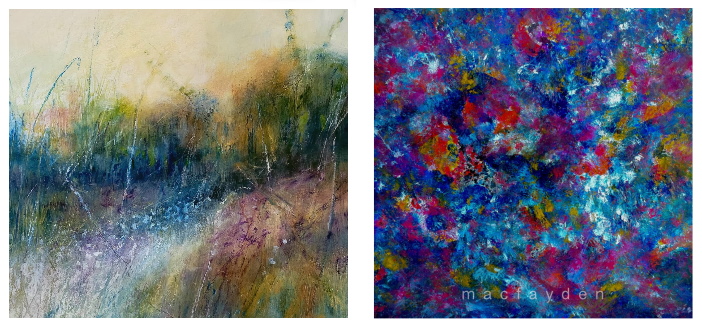
L: Heatherdown September Hillside, by Ellen Andreassen R: White, Interrupted, by Laurie MacFayden

There’s something about paintings that call you into the gut of their landscape, invite you to look around, then lead you down many paths, widening your sense of humanity, your hope, convincing you, finally, that this whole enterprise called life, is one colossal, possible, divine painting. (Here’s to all the inspired painters who keep posting their work. Here’s to the Great Painter.)


The Painter

Look how an ocean toned canvas
makes the sea star scarlet.

Look how the ash from last year’s fires
brings a crop of bees to the blooming ground.

Look how the young rose
grows, safe under the wild cover of weeds.

Look how often the colt falls in the pasture
to find its walking legs.

Look at all the weepers at the water’s edge,
abruptly thrilled by what’s washing up.

Look how the flooded river
brought them all together.

Look how an injured wind
sweeps the town square clean.

Look how you thought everything depended on a kiss
at the darkened exit of the school gym.

Look how the cake makes you think of coins in wax paper,
makes you think of your mom.

Look how stopping at the point of wanting more,
makes the wine finer.

Look, we thought everything was falling down,
but it’s really just us, half-built.

Look, I’ve spent oh two hours writing this poem
and a lifetime thinking about it, while you, daily,

daub your brush in the city’s powdered cinder
and crimson spillage,
paint us with more and more light.